
Our Problem with Authority
And how we can reclaim it

Taught from birth that the ancient religious stories occurred in real life, I believed that Moses led his enslaved Israelites from Egypt, pursued by the angry Pharaoh and his army. Seeing Moses’ struggle to save his people, God parted the Red Sea so they could cross, then let the waters drown their pursuers.
It was told as history, not mythology. Later, I learned to think critically.
When we’re free, we can ask good questions. What kind of God favors one people over another to the extent that he kills members of the human race he created? Can God be that insecure? Perhaps he designed the whole thing wrong?
No matter how much we might love and respect them, it’s OK to question authorities in the various forms they come in. A secure authority doesn’t mind that, respects our right to disbelieve or doubt, and gives way before the force of a better argument.
What would life be like if Copernicus hadn’t defied the authority of teachers?

He only initiated the scientific revolution by proposing the heliocentric model, placing the Sun, not the Earth, at the center of our corner of the universe.
Without his questioning the given truths of his time, our shift away from Aristotelian physics and Ptolemaic astronomy would have been seriously retarded. A slower evolution of astronomical knowledge could have delayed advancements in navigation and exploration. The medieval view of Earth as the focal point of divine creation might have remained dominant longer. But no! Copernicus questioned authority.
Our enduring problem with authority
Unfortunately, our reluctance to challenge authority remains a perplexing problem for at least two reasons:
Too few of us learn to think critically, even understand what it is.
The issue is much, much broader than the religious domain.
Humans have great difficulty recognizing when authorities are manipulating us when we want what they say to be true. I’ve experienced it first-hand. I shared before how easy it was to do something once that was against my better instincts, simply because I wanted so much for what I was involved in to be right. Most of us have likely lost our ability to think critically from time to time.
It sometimes feels like we’re swimming among predators claiming the authority to tell us what is right, what to think, what to do, etc. In religion, politics, business, science, technology, family healing, exercising, dieting, weight loss, ….
These authorities light our candles of hope with their powerful flame for a time. And an astonishing number of these prophets ultimately find ways to extinguish their own flame. You wonder, then, what they thought they knew?
Think about Deepak Chopra, the highly educated, internationally renowned spiritual teacher, purportedly teaching us how to live consciously. How was it, then, that he came to cultivate a close personal relationship with Jeffrey Epstein, disgraced financier and monstrous, convicted sex offender? How could the one teaching us how to live have been so naïve, so unconscious himself, as to be unaware that girls were being raped: in volume? Or if he knew, how could he rationalize to himself in a way that is, uh, the epitome of unconscious behavior? What happened inside him? Did he lose his way? Or did he ever have anything to teach?
Since I’ve lost my way following a manipulator before — and more than once, mind you —, I know how I can make things right in my mind.
If any of you mourn Deepak’s demise, I feel for you. I know how that feels. I was not a follower of his. I always wondered if everything was right with him. Instinct developed from earlier experiences, I guess.
Those who step forward in the religious sector to lead the needy so often lose their way — assuming they had one to begin with. I’m talking about Jim Jones, one hand on his Bible and another on his cyanide-laced fruit drink, about Marshall Applewhite and Bonnie Lu Nettles …
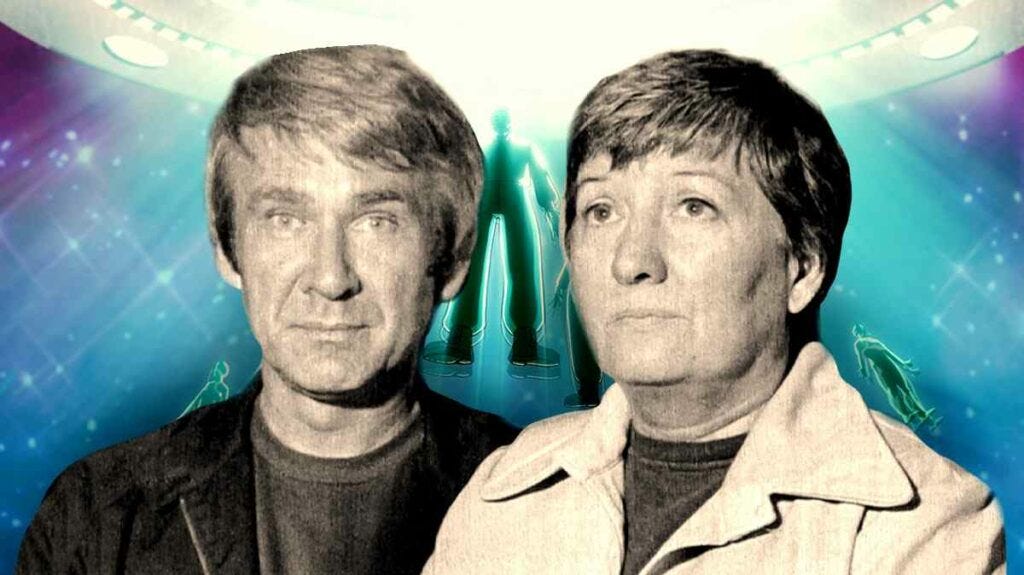
… with their revelations of a superior race of extraterrestrials, of David Koresh, self-proclaimed messiah in Waco, of Jim Bakker, Jimmy Swaggart, Ted Hagaard, Ravi Zacharias, Carl Lentz — the list is endless …. And that’s just the religious sector.
What about the political cults, like the big one we’ve got now in the USA? It’s no coincidence that a horde of religious cults prop up Trump: the look-and-feel is similar: Believe in me. I’ll show you the way. I’ll tell you what to think.
The good news
We can train ourselves to spot them. We can watch them try to sell us the one true elixir we long to taste. We can think critically. We can refuse. The trick is to watch ourselves watching and see ourselves with a little more objectivity this time.
Here’s a little example. While I agree with most of the opinions of MSNOW hosts, they’re selling a point of view. I’m returning to get news from PBS NewsHour. Why? Less opinionating, more facts, greater objectivity. I’d rather hear both sides of an argument and challenge myself rather than pat myself on the back with an affirmation of what I already think.
We have two political cults in America: Left and Right. Neither seems very interested in seeing through the lens of the other side. The way forward will likely be inclusive.
When someone says something that really appeals to me, I’m continuously training myself to ask questions and demand more of myself. Do I feel that niggling little glitch I so want to put aside? What’s the one claiming authority get out of this? Do the things I’m being told defy ordinary logic? What about me wants so badly to believe? What’s the true price of entry?
In the end, we’re in charge. We choose to claim our authority or give it away.
“When a state treats its citizens as an existential threat then that state ceases to be a democracy.”
― Suchitra Vijayan
You bring up many solid questions, Tim especially your last one, "Whet's the true price of entry?"
I pulled the plug on religion in 2003, when the U.S. had taken our country to Iraq on false pretenses, and our fearless leaders were chanting, "Onward Christian Soldier." I knew that none of this was Christian in any context (my father was an Episcopalian priest, so I had received my induction through him) but it forced me to look deeper into the 'true purpose' of our leaders. And to question authority at every step. I don't have the answers, but I certainly have the questions.